Sod or Seed for a Bare Yakima Yard?
Both can give you a good lawn, but they ask different things of you in the first month.
October 7, 2026 · 4 min read
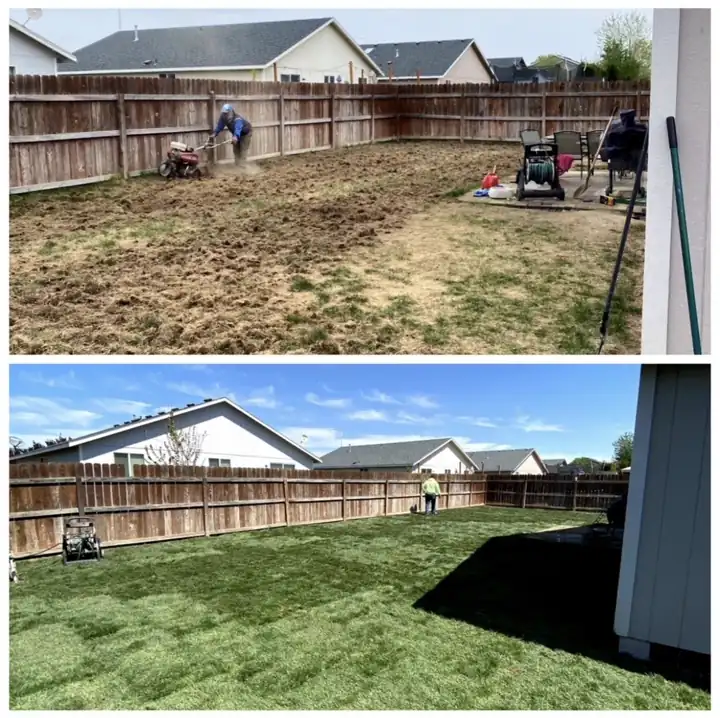
Start with what is under the yard now
If your yard is bare dirt, old gravel, or a tired mix of weeds and dust, the choice between sod and seed matters less than the ground you put either one on. Grass roots need loose soil to grow into. A hard, compacted surface sheds water, starves roots, and turns even a good lawn into a patchy one by August.
Summers in the Yakima valley are hot and dry, and yard soil here can be sandy and fast-draining or heavier and slow to take water. Either way, the work done before any grass goes down decides how the lawn does. Plan on loosening the top few inches, pulling out rocks and old roots, and mixing in compost where the dirt is poor. If gravel was spread over the yard, it usually has to come out or be worked deep into the soil, because grass does not root well in a gravel layer.
How sod works
Sod is grass that was already grown on a farm, cut into strips, and rolled out over your prepared soil. You get a green yard the day it goes in. That is the big draw, and it is why many homeowners pick it for a front yard that everyone sees from the street.
Sod also holds soil in place, so slopes and open ground are less likely to wash out in a summer storm. Weeds have a harder time getting started because the turf is already thick. The tradeoff is the care it needs in the first weeks. Fresh sod has short roots sitting right on top of your soil, and it dries out fast in Yakima heat. A strip that goes without water for one hot afternoon can brown and curl at the edges.
How seed works
Seed is slower and more hands-on. You spread it over prepared soil, rake it in lightly, and keep the surface damp while it sprouts. Expect to wait a couple of weeks to see green, and longer before it looks like a real lawn. During that stretch, birds, wind, and heavy watering can move the seed around, and weeds will try to get in before the grass fills the space.
Seed has real strengths, though. It gives you more choice in grass type, which can matter if part of the yard is shady or gets hard use from kids and dogs. It also suits large areas and odd shapes, where laying strips would mean a lot of cutting. Timing matters more with seed. Late summer into early fall and early spring tend to be easier on new grass than the middle of a Yakima July.
What good prep looks like
Whichever you pick, the sequence is similar. A good installer tills or loosens the soil, rakes out debris, and grades the ground so water runs away from the house instead of pooling. Then comes a light roll to firm the surface without packing it hard. For sod, the soil should be smooth and slightly damp so the strips make full contact. For seed, a firm, fine surface helps the seed stay where it was put.
Grading is the step people skip when they do the job themselves, and it is the one you notice later. A low spot becomes a puddle. A high spot gets scalped by the mower. Walk your yard after a rain, or run the hose for a few minutes, and watch where the water goes. That tells you a lot about what needs fixing before grass goes down.
The first weeks matter most
New sod needs to stay moist underneath, not just on top. After watering, lift a corner and check that the soil below is damp. In hot weather that can mean several short waterings a day for the first week or so, then fewer as the roots take hold. Stay off it as much as you can. After about two weeks, tug gently on a corner. If it resists, the roots are grabbing.
New seed needs the top inch kept damp until it sprouts, which often means light watering a few times a day. Do not let it dry out and crust over. Wait to mow until the grass is tall enough, and keep the mower blade sharp so it cuts the young grass instead of ripping it out. With either method, keep heavy foot traffic and pets off the area for the first few weeks.
So which one should you choose?
If you want a finished-looking yard quickly and you can keep up with the watering, sod is usually the better fit for a front yard. If you have a large area, a specific grass blend in mind, or more time than hurry, seed can do the job well. Some homeowners sod the front and seed the back.
Abel's & Sons Lawn Service does both sod installation and seeding for homeowners in Yakima County and the Ellensburg area. They are a father-and-sons crew with 13 years of lawn work in the valley, and they can look at your yard and tell you which method suits it.
If you have a bare or gravel yard and aren't sure which way to go, call (509) 985-4603 and ask for a free estimate.
Abel's & Sons Lawn Service LLC, (509) 985-4603
Call (509) 985-4603More articles
What a Weekly Mowing Visit Should Include
The stripes you admire on a neighbor's lawn come from a few simple habits, and you can ask for them.
When to Replace a Wood Fence With White Vinyl
Wood fences age out. Here is how to tell yours has, and what to expect when you switch to vinyl.