When to Replace a Wood Fence With White Vinyl
Wood fences age out. Here is how to tell yours has, and what to expect when you switch to vinyl.
October 7, 2026 · 4 min read
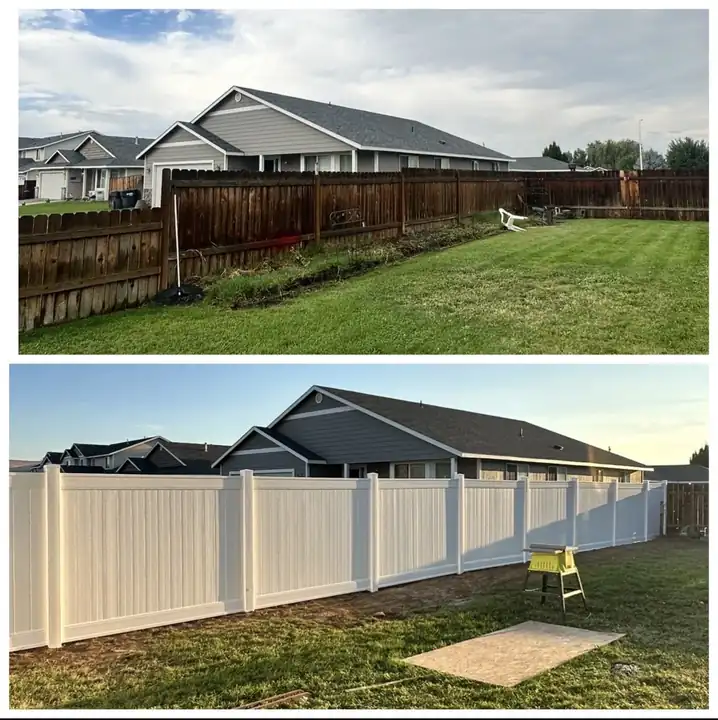
Signs your wood fence is done
Wood fences in the Yakima valley take a beating. Hot, dry summers bake the boards, wind and cold snaps work on the posts, and sprinkler spray hits the bottom few inches over and over. A fence can look fine from the street and still be on its last season.
Here is what to check on a walk along the fence line:
- Posts that rock or lean when you push on them near the top.
- Soft or crumbling wood at the base of a post. Poke it with a screwdriver to find out.
- Boards that are cupped, split, or pulling away from the rails.
- Gaps wide enough that the fence no longer gives you privacy.
- Sections that have already been patched more than once.
One bad board is a repair. A leaning run with soft posts is a replacement. Posts do the real work in any fence, so when they go, the rest of the fence follows.
Why people move to vinyl
Vinyl panels don't need staining or painting. They don't rot, and insects leave them alone. A white vinyl privacy fence looks clean, and a rinse with the hose handles most dirt. Wood has its own appeal, but it asks for upkeep every few years, and many homeowners get tired of that.
Vinyl isn't perfect, so it helps to know the limits. A hard hit can crack a panel. The color is built in, so you can't repaint it a new shade later on. Panels come in set sizes, so ask how the installer will handle sloped or uneven ground on your lot, whether by stepping the sections or another method.
What a wood-to-vinyl replacement involves
The job starts with the old fence coming out: boards, rails, and posts. Posts are often set in concrete, and pulling them leaves holes that need to be dealt with. Then the new line is measured and marked, post holes are dug, and new posts are set and left to firm up before the panels go on. Panels slide into the posts or attach with brackets, and caps finish the tops.
Post depth and spacing matter, because a solid privacy fence catches wind like a sail. Well-set posts are what keep a fence straight for years. Gates are the most stressed part of any fence, so they deserve good hinges and a latch that lines up.
Abel's & Sons does vinyl fencing in Yakima County, and their own job photos show wood fences replaced with white vinyl privacy fences in backyards, side yards, and on a corner lot. The old fence comes out and the new one goes in along the same line.
What to clear before the crew arrives
Give the crew a clear path along the entire fence line, on your side and, if you can arrange it, the neighbor's. Move patio furniture, planters, grills, and trampolines a few feet back from the fence. Cut back shrubs and vines that have grown into the boards, since they get in the way of both tearing out and setting new posts.
If sprinkler lines or drip tubing run near the fence, show the installer where they are so digging doesn't hit them. Ask the installer how underground utilities will be checked before any holes are dug. Make sure the gates can be reached, and keep dogs inside the house on work days.
Tell your neighbors the work is coming. The old fence likely sits on or near the shared line, and a neighbor who knows what is happening is less likely to be surprised by a crew next door.
Timing and what to expect afterward
Fence work goes more smoothly in dry weather, when the ground is firm enough to dig and the crew can get in and out of the yard without tearing it up. Late summer and fall are popular times, because homeowners want the new fence up before winter wind starts. Talk about timing when you get your estimate, since schedules fill up.
Once the vinyl is in, upkeep is light. Rinse it a couple of times a year, and keep the grass trimmed along the base so clippings and dirt don't stain the bottom of the panels. Lawn work next to a new fence is easier too, since there are no rotting boards to snag a string trimmer.
Know your lines and your rules
Before you order, find your property line. Your survey or plat will show it, and you shouldn't assume the old fence sat exactly on it. Also check with your city and any homeowners association about whether your fence height or style needs approval. Those rules differ from place to place, so ask rather than guess.
If your fence is leaning and you want to see what white vinyl would look like on your property, call Abel's & Sons at (509) 985-4603 for a free estimate.
Abel's & Sons Lawn Service LLC, (509) 985-4603
Call (509) 985-4603